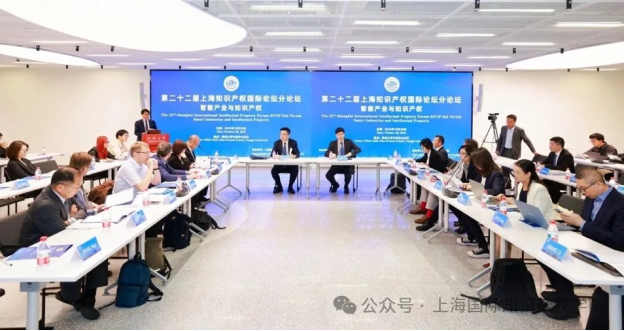
On 20 October 2025, the “22nd Shanghai International Forum on Intellectual Property – Sub-Forum on Intelligent Industry and Intellectual Property” was successfully held at Tongji University. Yu Chen, Deputy Director of the Shanghai Intellectual Property Administration, and Zhao Hongduo, Assistant to the President of Tongji University, attended and delivered speeches at the opening ceremony. The ceremony was hosted by Dang Jianwei, Deputy Dean of the Shanghai International College of Intellectual Property.
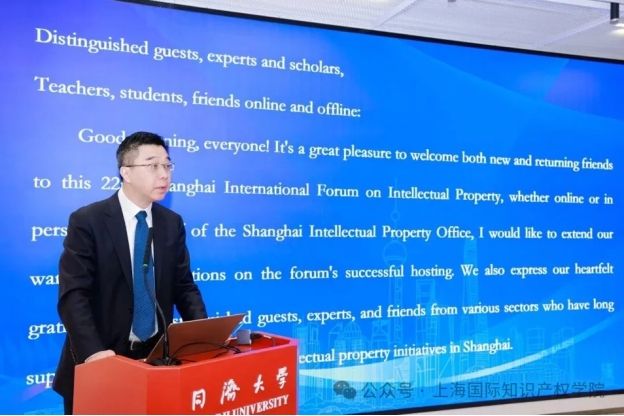
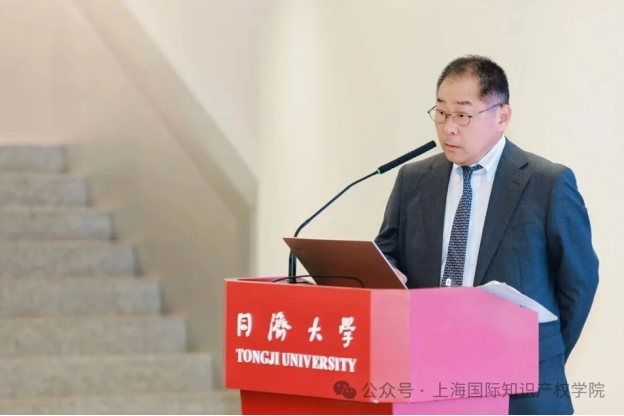
Speech by Yu Chen
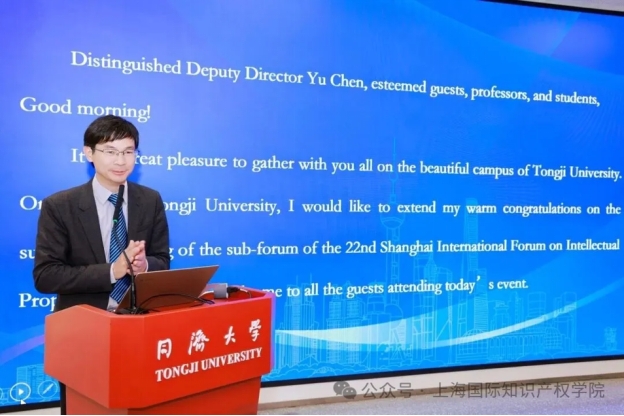
Speech by Zhao Hongduo
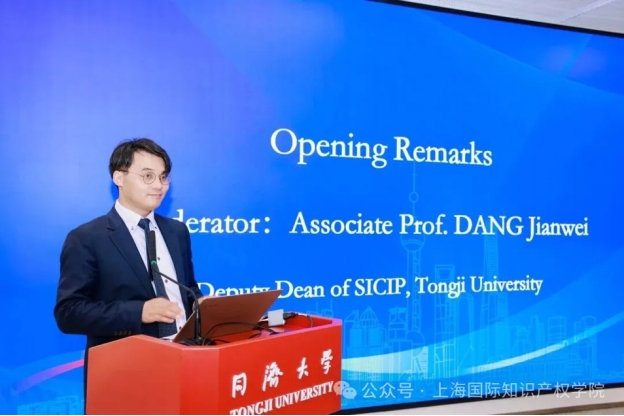
Hosted by Dang Jianwei
In the opening remarks, Yu Chen stated that at present, the artificial intelligence industry is reshaping the global economic landscape and innovation ecosystem. The continuous technological breakthroughs bring new opportunities, but also place higher requirements on the adaptability and forward-looking nature of the intellectual property system. Shanghai is committed to building an internationally competitive highland for AI innovation and a highland for international IP protection; facing the future, it will continue to promote innovation in IP governance.
Professor Zhao Hongduo pointed out that Tongji University attaches great importance to the development of the intellectual property discipline, with special emphasis on international cooperation and interdisciplinary integration, and has achieved remarkable results in talent cultivation, scientific research, and social service.
The forum focused on three modules — fundamental issues of artificial intelligence and intellectual property, information and communication technology, and biomedicine — bringing together well-known experts, scholars, and practitioners from China and abroad to explore frontier IP issues in this field in depth.
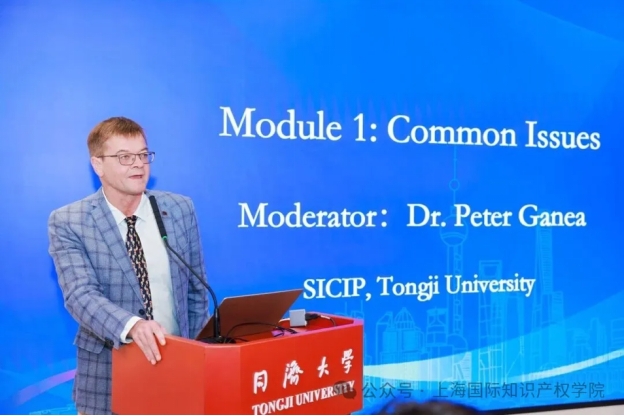
Host: Peter Ganea
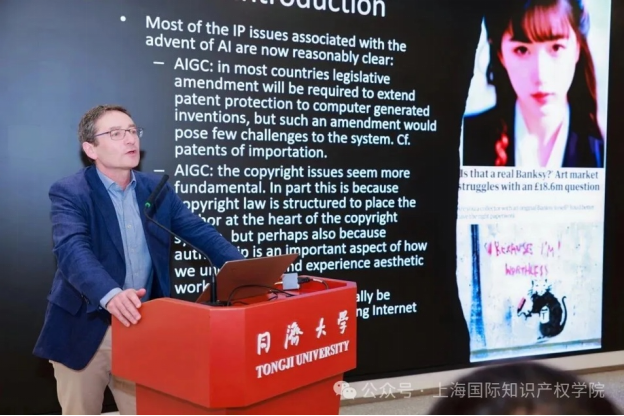
Keynote Speech: Robert Burrell
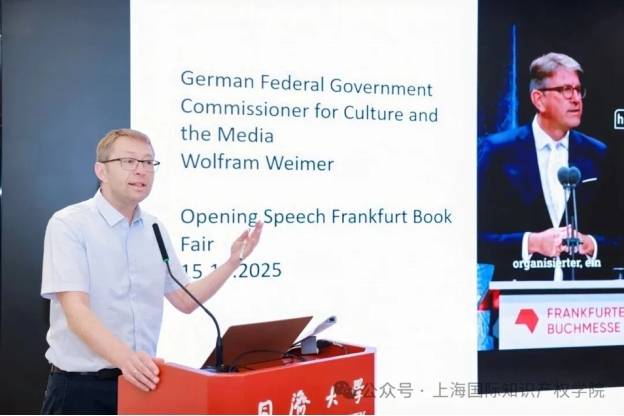
Keynote Speech: Alexander Peukert
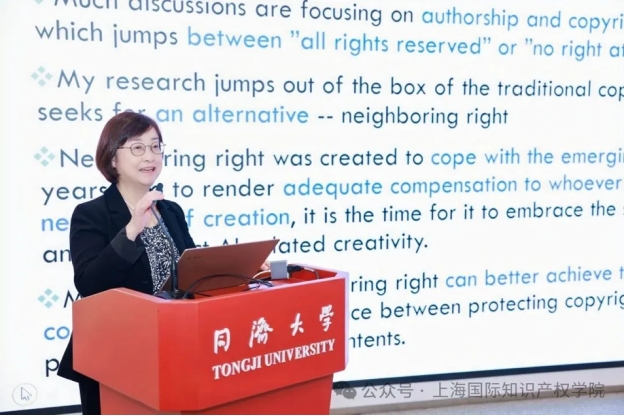
Keynote Speech: Li Yahong
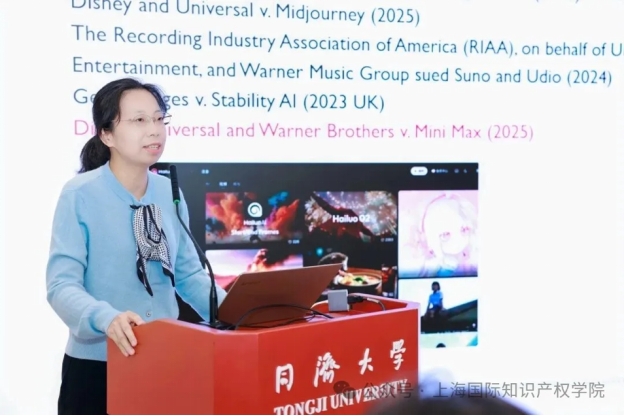
Keynote Speech: Cha Yuan Chengshu
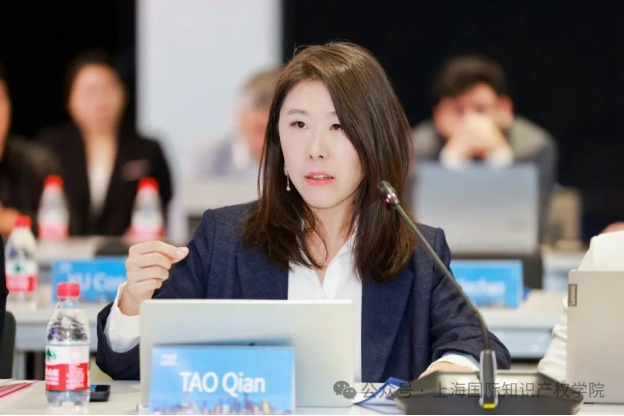
Discussant: Tao Qian
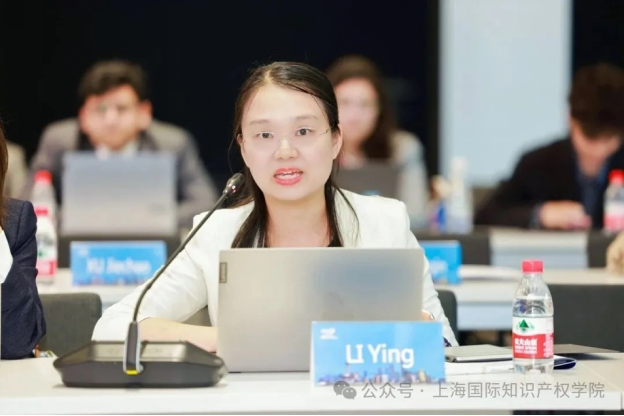
Discussant: Li Ying
Discussant: Hua Jie
Module One focused on the fundamental issues of artificial intelligence and intellectual property.
Professor Robert Burrell of the University of Oxford discussed the practical application of AI in trademark examination, exploring legal and systemic challenges such as the accuracy and lack of transparency of automated evaluation tools in assessing distinctiveness and conflict searches.
Professor Alexander Peukert of Goethe University Frankfurt pointed out that the copyright chapter of the EU Code of Conduct for General-Purpose Artificial Intelligence requires large-model providers to comply with EU copyright law, including establishing compliance policies, ensuring lawful access to training data, and respecting the “opt-out” rights of rights holders.
Facing the current global dilemma of “all or nothing” in AIGC copyright protection, Professor Li Yahong of the Faculty of Law of the University of Hong Kong proposed drawing on the legislative experience of establishing neighboring rights in the Rome Convention, and creating new types of neighboring rights for AIGC and AI data training to achieve a balance between protecting creators' rights and promoting public access.
Professor Cha Yuan Chengshu of Osaka University, based on Japanese practice, pointed out that under Japan’s current Patent Act, AI-autonomously completed inventions cannot be granted patent rights because the inventor must be a natural person, but inventions completed by humans using AI as a tool can still be protected by patents.
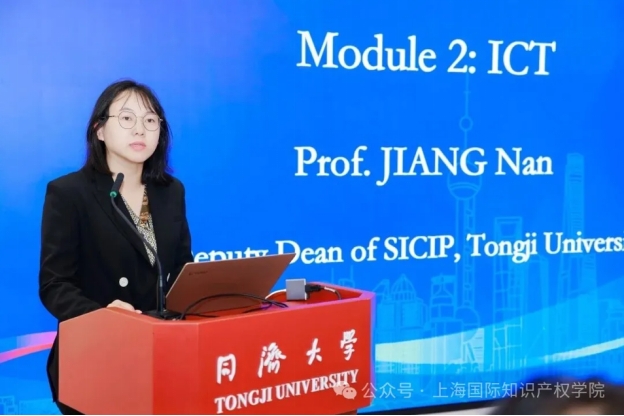
Host: Jiang Nan
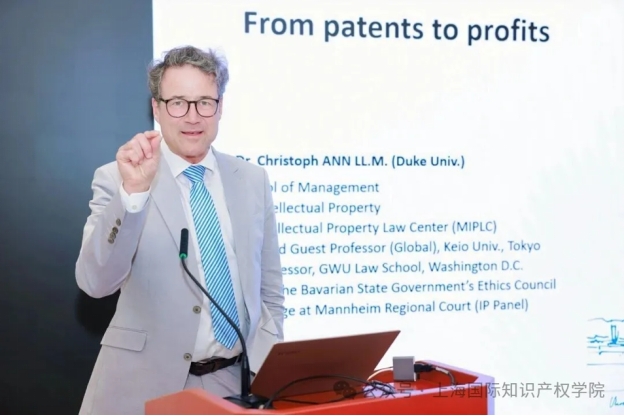
Keynote Speech: Christoph Ann
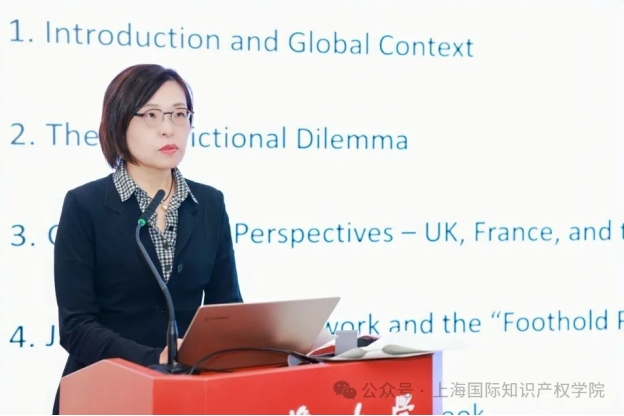
Keynote Speech: Nagata Mari
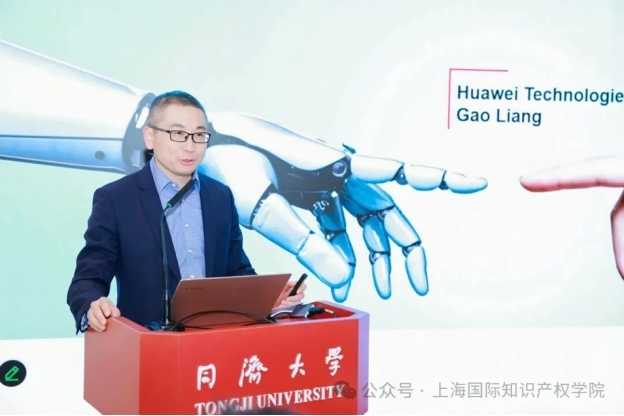
Keynote Speech: Gao Liang
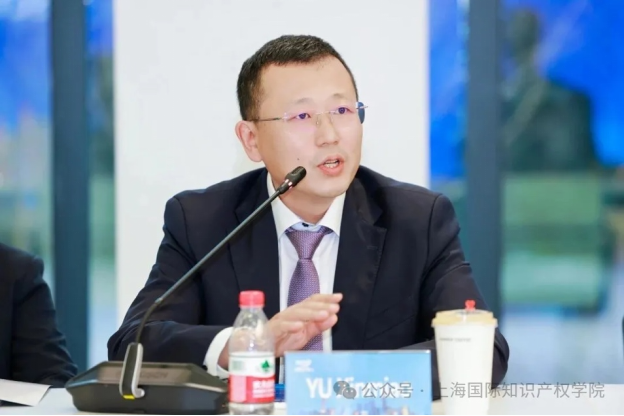
Discussant: Yu Xinmiao
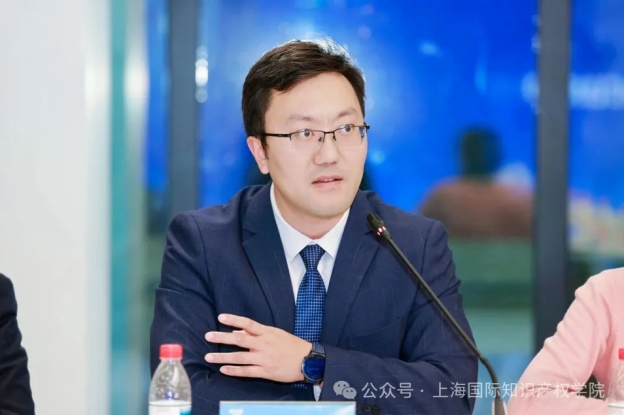
Discussant: Xu Ming
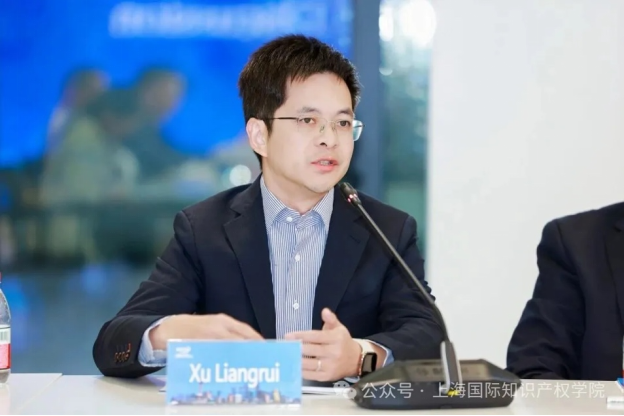
Discussant: Xu Liangrui
Module Two focused on intellectual property issues in the field of information and communication technology.
Professor Christoph Ann of the Technical University of Munich pointed out that the key to the commercial success of patents lies in effectively transforming them into market products or services — through internal use, licensing, or sale — to maximize value, rather than relying solely on patent grants.
Professor Nagata Mari of Osaka University discussed judicial challenges in global Standard-Essential Patent (SEP) licensing under the FRAND principle, revealing how courts in various countries are breaking the territoriality of patents in the name of contract law and competing for dominance in global FRAND pricing. Based on Japan’s current legal framework, she introduced Japan’s “Foothold Principle,” providing a unique proposal for constructing an Asian balanced model and reshaping a new technological governance order.
Director Gao Liang of Huawei Technologies Co., Ltd., drawing from corporate practice, shared the latest global developments in SEP litigation, and pointed out that Huawei, relying on its SEP layout in areas such as 5G, actively advocates a balanced IP pricing strategy based on the FRAND principle, promoting technological innovation and industrial prosperity through global patent licensing and cooperation.
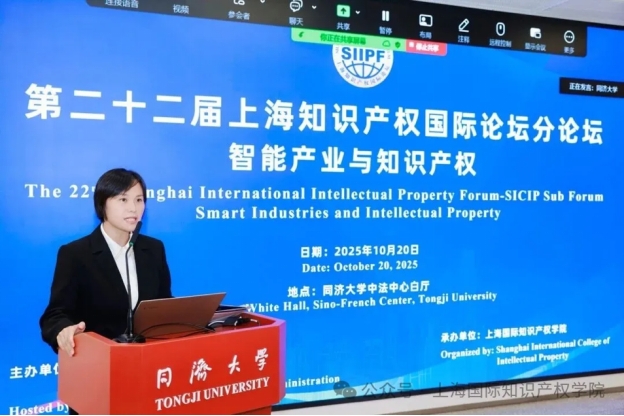
Host: Xie Yan
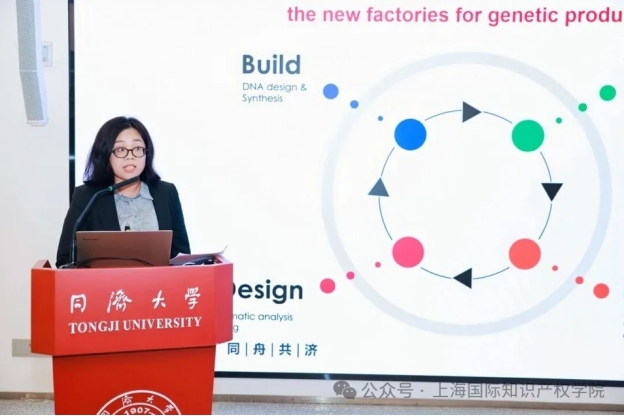
Keynote Speech: Jiang Li
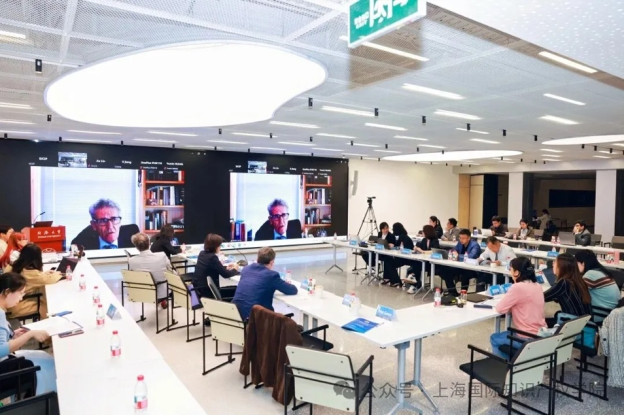
Keynote Speech (online): Robin Jacob
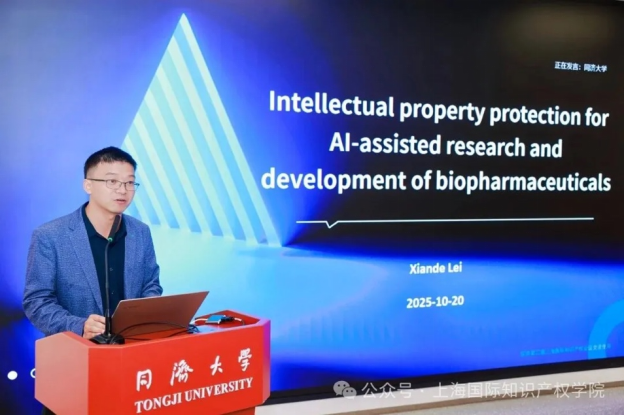
Keynote Speech: Lei Xiande
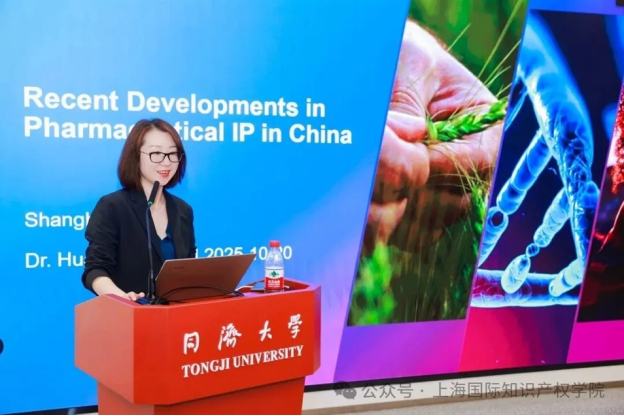
Keynote Speech: Zhang Huaning
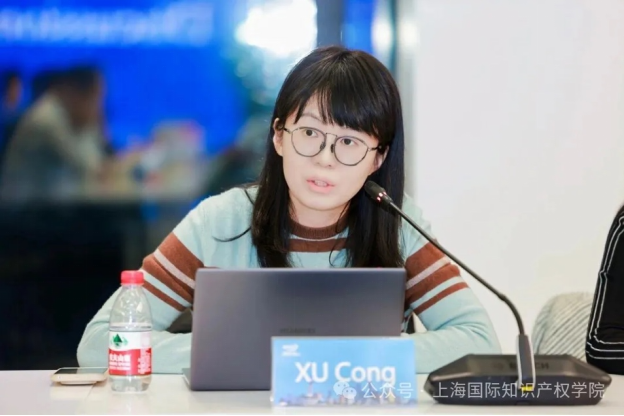
Discussant: Xu Cong
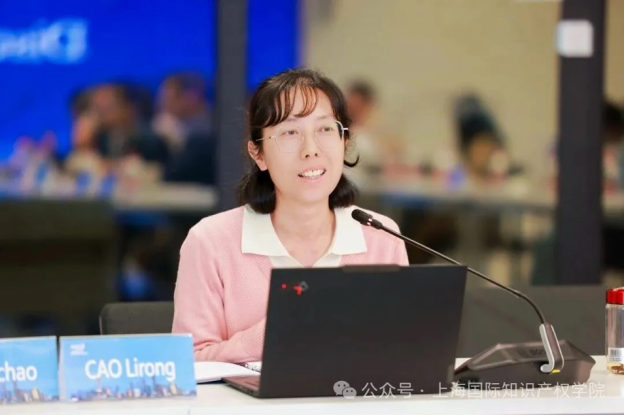
Discussant: Cao Lirong
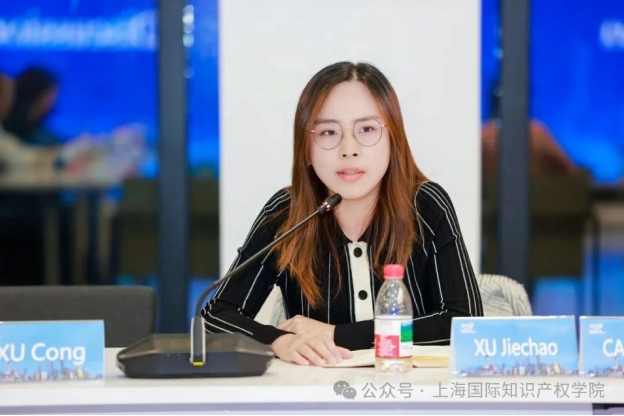
Discussant: Xu Jiechao
Module Three focused on the IP protection challenges in the pharmaceutical industry.
Associate Professor Jiang Li of the College discussed the legal challenges faced in the IP protection of Digital Sequence Information (DSI) of genetic resources, analyzed controversies regarding the applicability of copyright protection to gene sequences, and explored international practices and possible solutions for source disclosure of genetic resources in the patent system.
Dr. Lei Xiande of Kangma Biotechnology Co., Ltd., drawing from corporate R&D practice, shared application scenarios of artificial intelligence in drug discovery, analyzed opportunities and challenges faced by AI-assisted R&D under traditional patent rules, and introduced the company’s IP protection practices in AI-assisted research.
Dr. Zhang Huaning, Greater China IP Director of Bayer (China) Co., Ltd., emphasized that China is shifting innovation drug protection from “policy dividends” to “rule competition” through systems such as patent linkage and patent term compensation. He also noted that, amid the intertwining of judicial practice and international competition, China firmly holds the frontier battlefield of major-power technological sovereignty through IP and is rapidly rising as a global pharmaceutical innovation center.
Professor Robin Jacob of University College London delivered an online speech, stating that strong patent protection for medicines and vaccines is the core driving force for pharmaceutical innovation. It not only covers the high costs of R&D but also incentivizes pharmaceutical companies to accelerate vaccine innovation in response to public health needs. He also recognized the use of patent pools to address patent-thicket issues in the pharmaceutical industry.
All guests at the forum also offered pragmatic and in-depth remarks on relevant hot topics, with content that was constructive and inspiring. The forum ultimately achieved fruitful results, and all participants, based on shared understanding, jointly promoted innovation in the IP system and contributed to the sustainable and healthy development of the intelligent industry.
This sub-forum provided a high-quality dialogue platform for global IP governance in the intelligent industry, deepened theoretical and practical exploration of IP protection in the intelligent industry, and promoted cross-border and cross-field collaborative innovation and consensus. The successful conclusion of the forum further strengthened the College’s role as a link in international IP exchange and cooperation. In the future, the College will continue to cultivate interdisciplinary professionals and contribute to global innovation and collaborative progress in the field of intellectual property.




